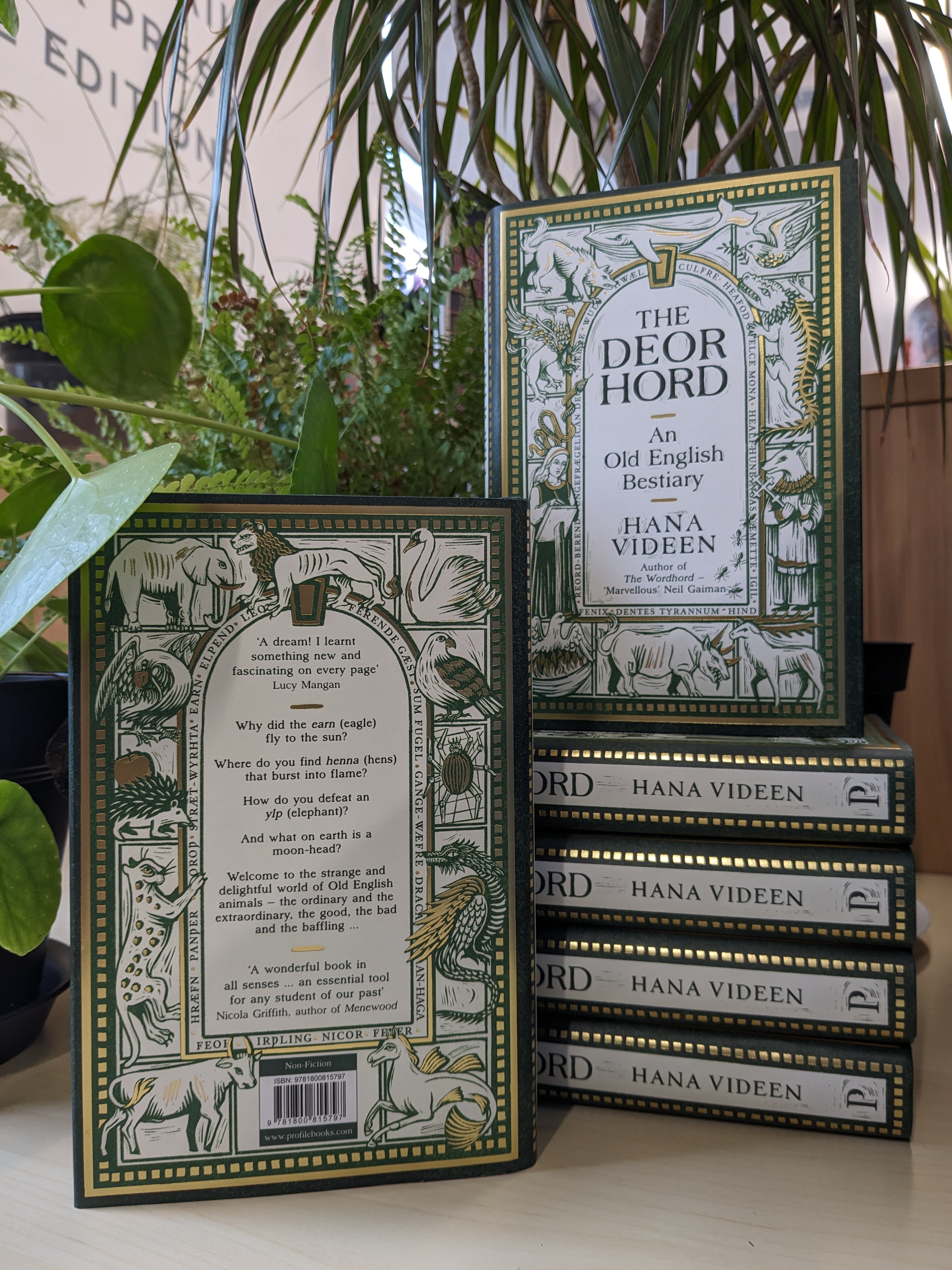
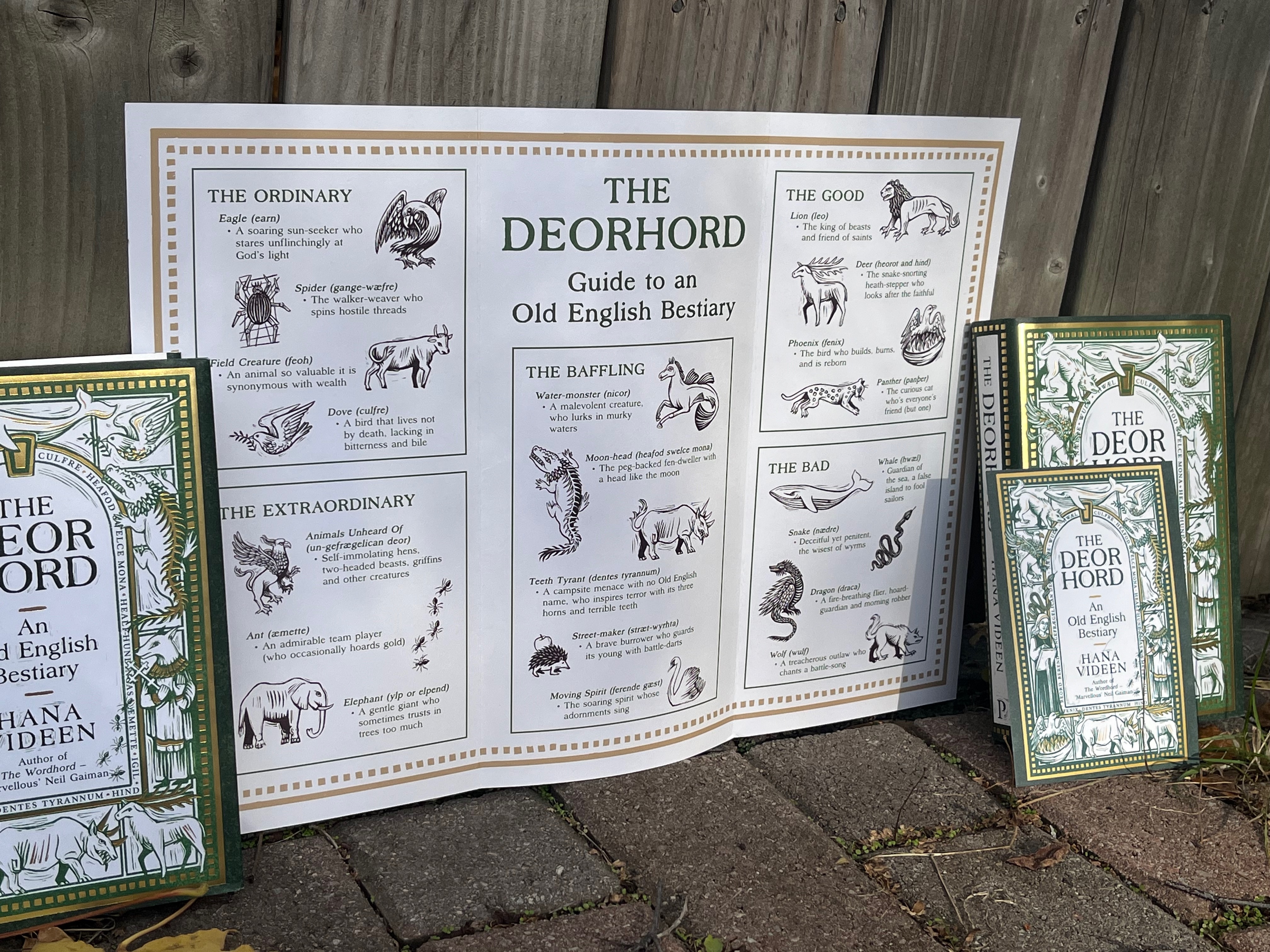
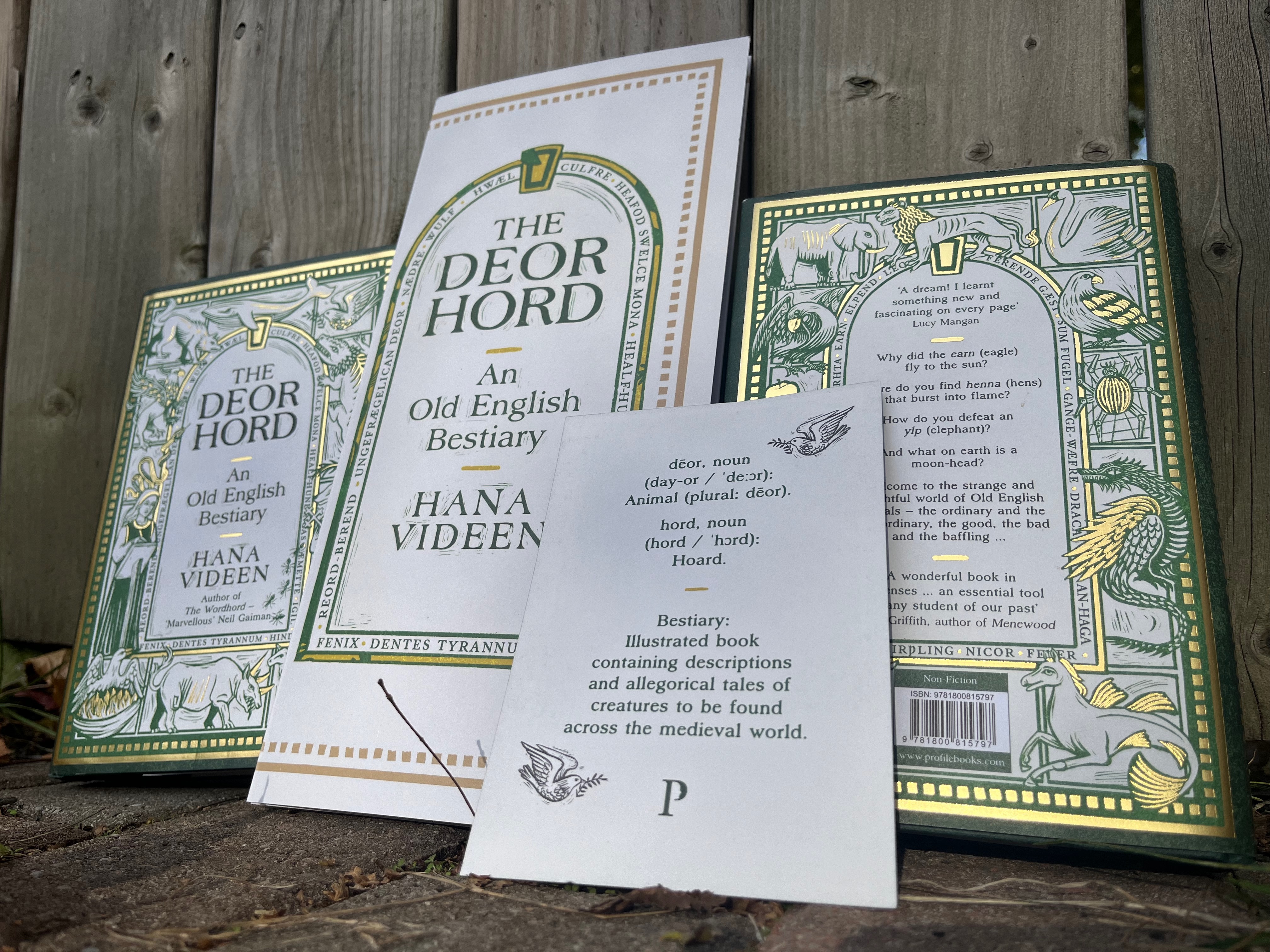
Welcome to the strange and delightful world of Old English animals – the ordinary and the extraordinary, the good, the bad and the baffling…
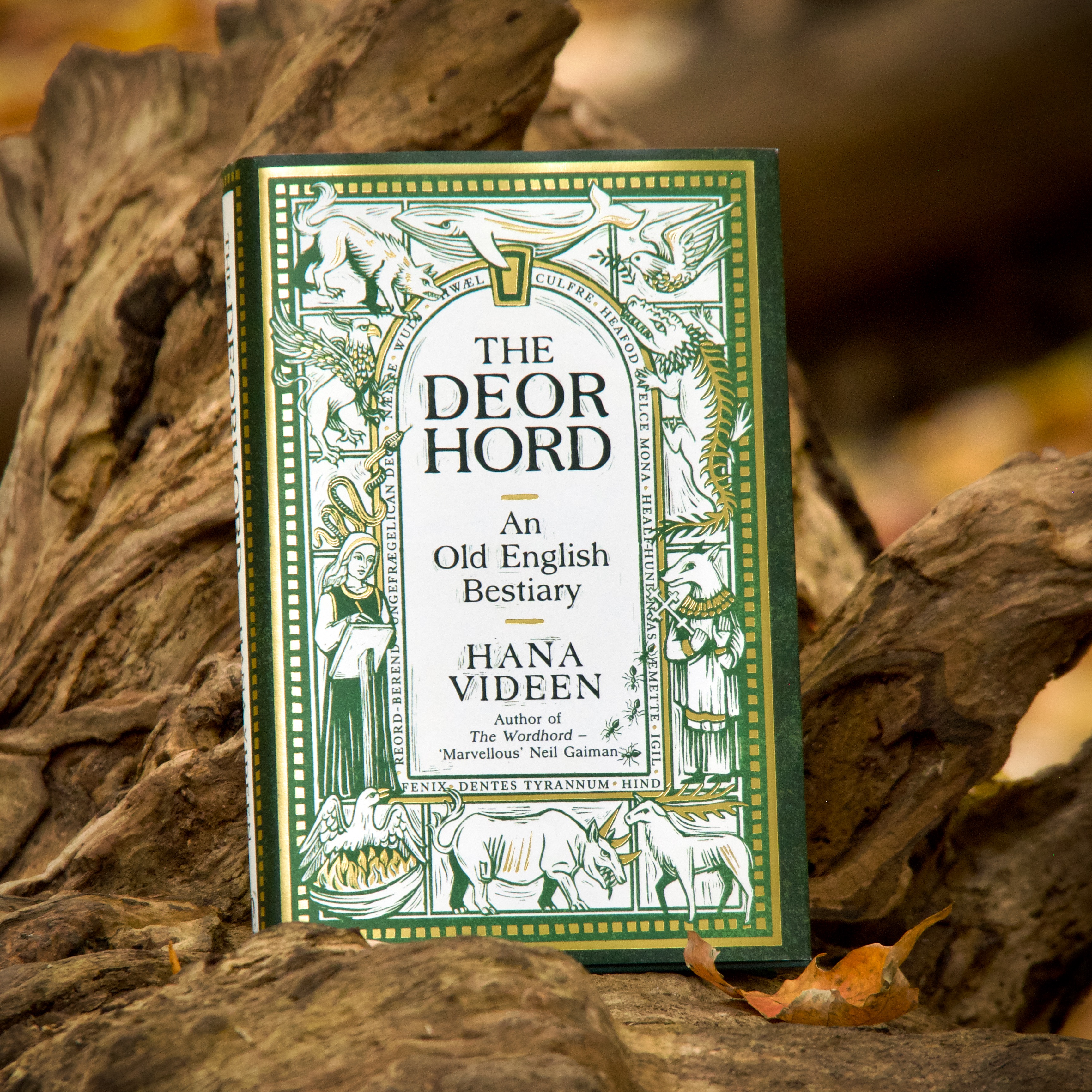
‘A dream! I learnt something new and fascinating on every page’ – Lucy Mangan
Many of the animals we encounter, from those in our fields to the ones in our fantasies, have remained the same since medieval times – but the words we use, and the ways we think about them, have often changed beyond recognition…
Old English was spoken over a thousand years ago, when every animal was a deor. In this glittering collection of words and animals we find deor big and small. From walker-weavers (spiders) and grey-cloaked ones (eagles) to moon-heads and teeth tyrants (historians still don’t know!), we discover a world both familiar and strange: where ants could be monsters and panthers could be your friend, where dog-headed men were as real as elephants and whales were as sneaky as wolves.
These are the magical roots of English today, and the stories they tell reveal as much about the world as they do about the strangest animals of all – us.
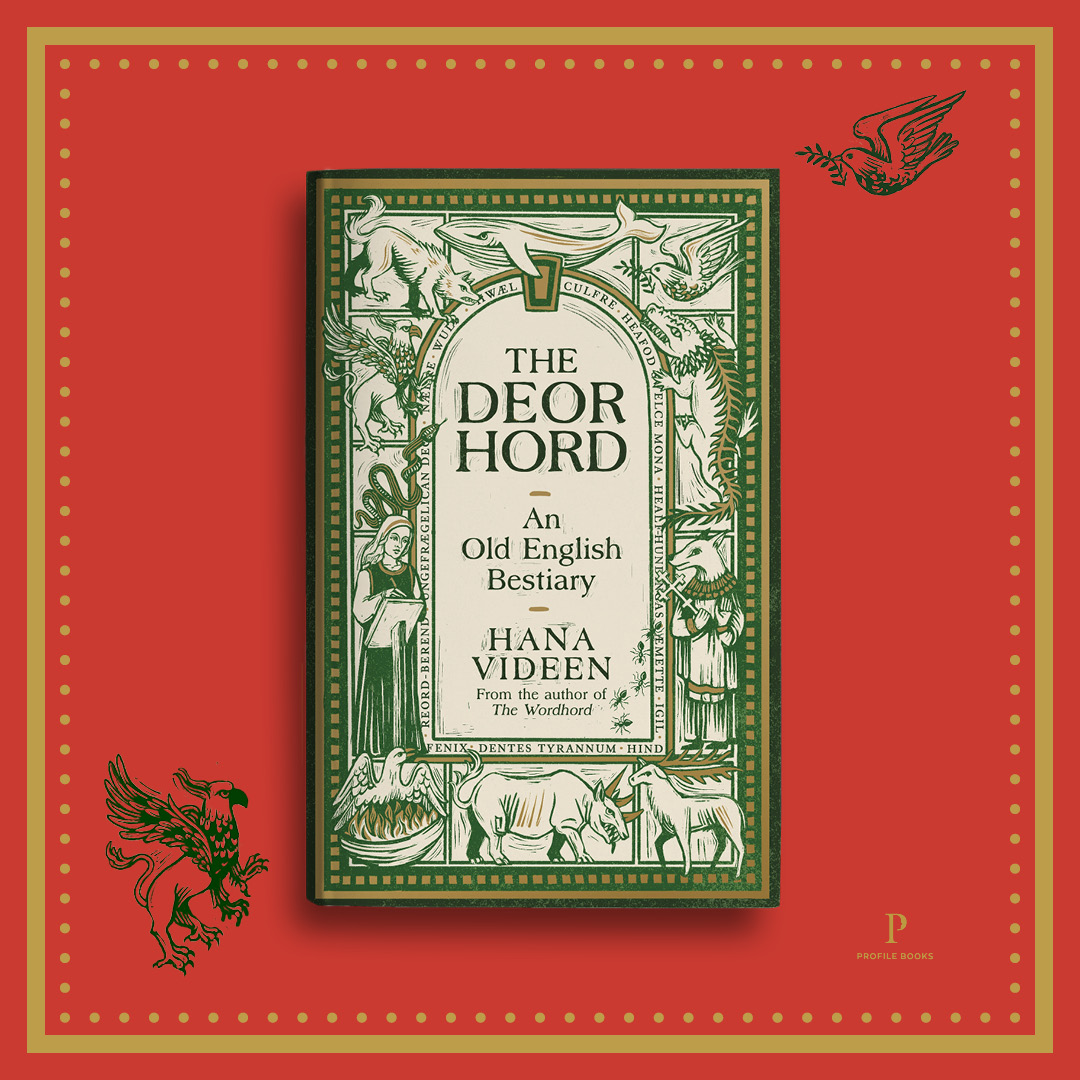
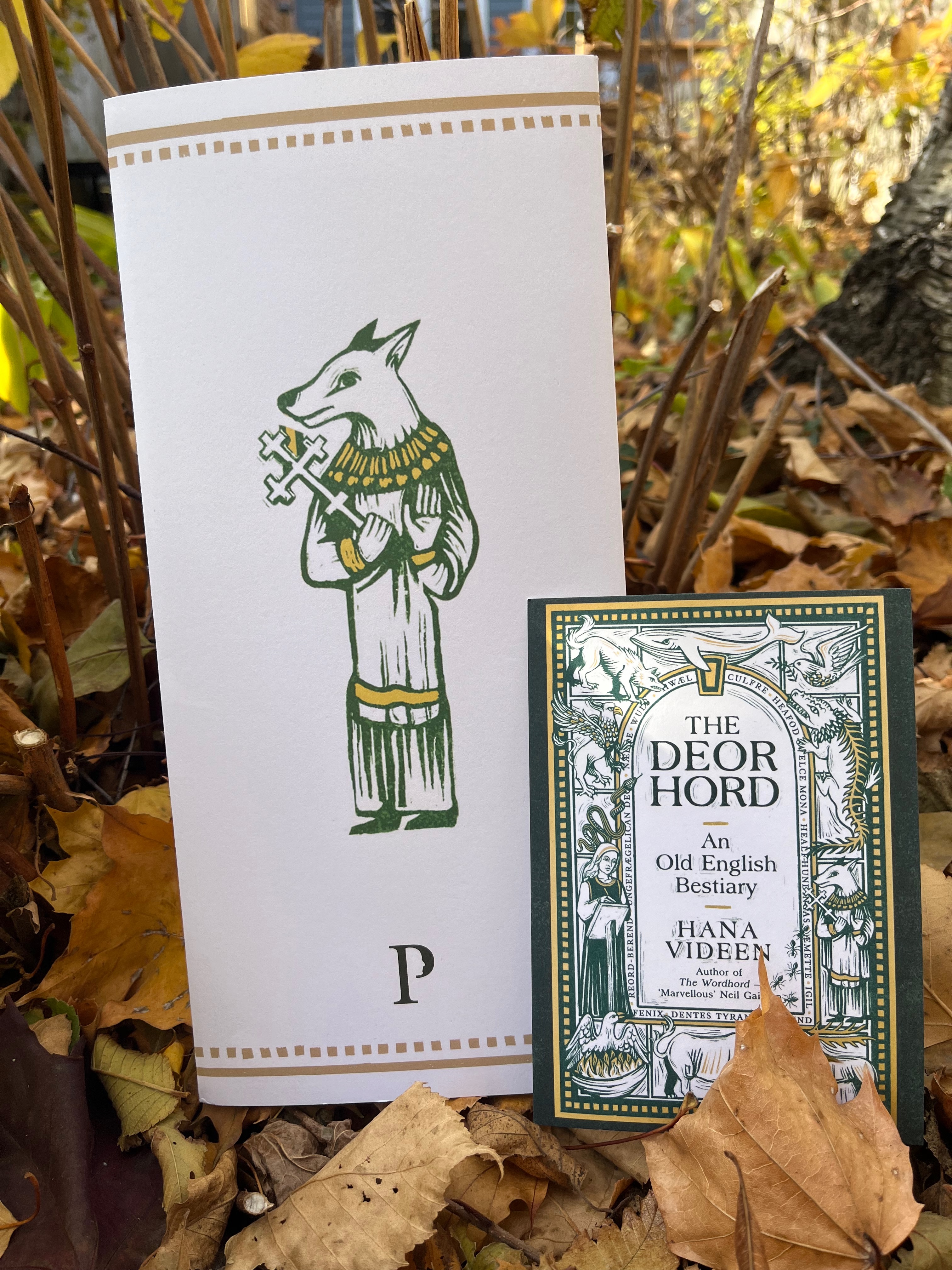
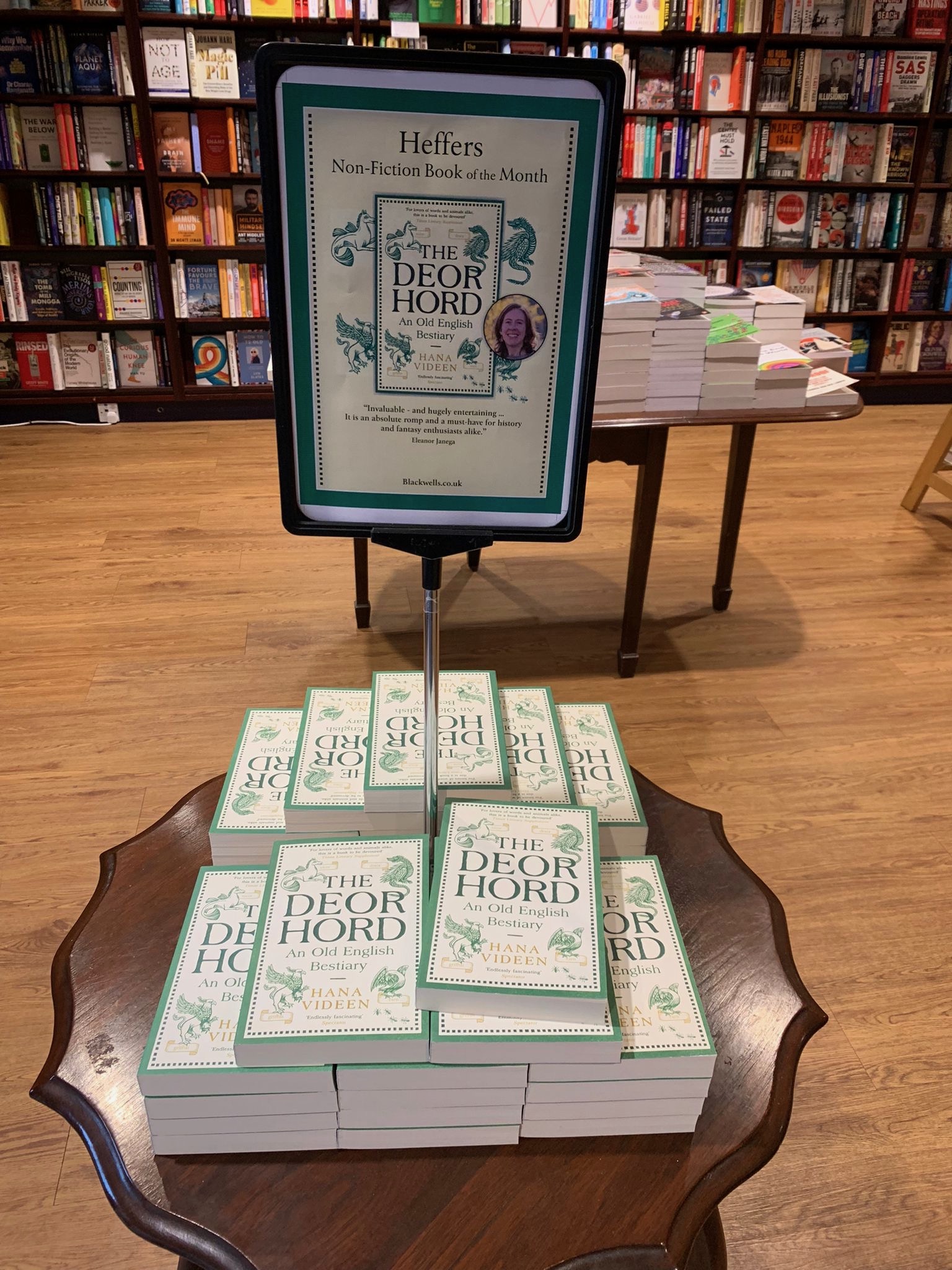
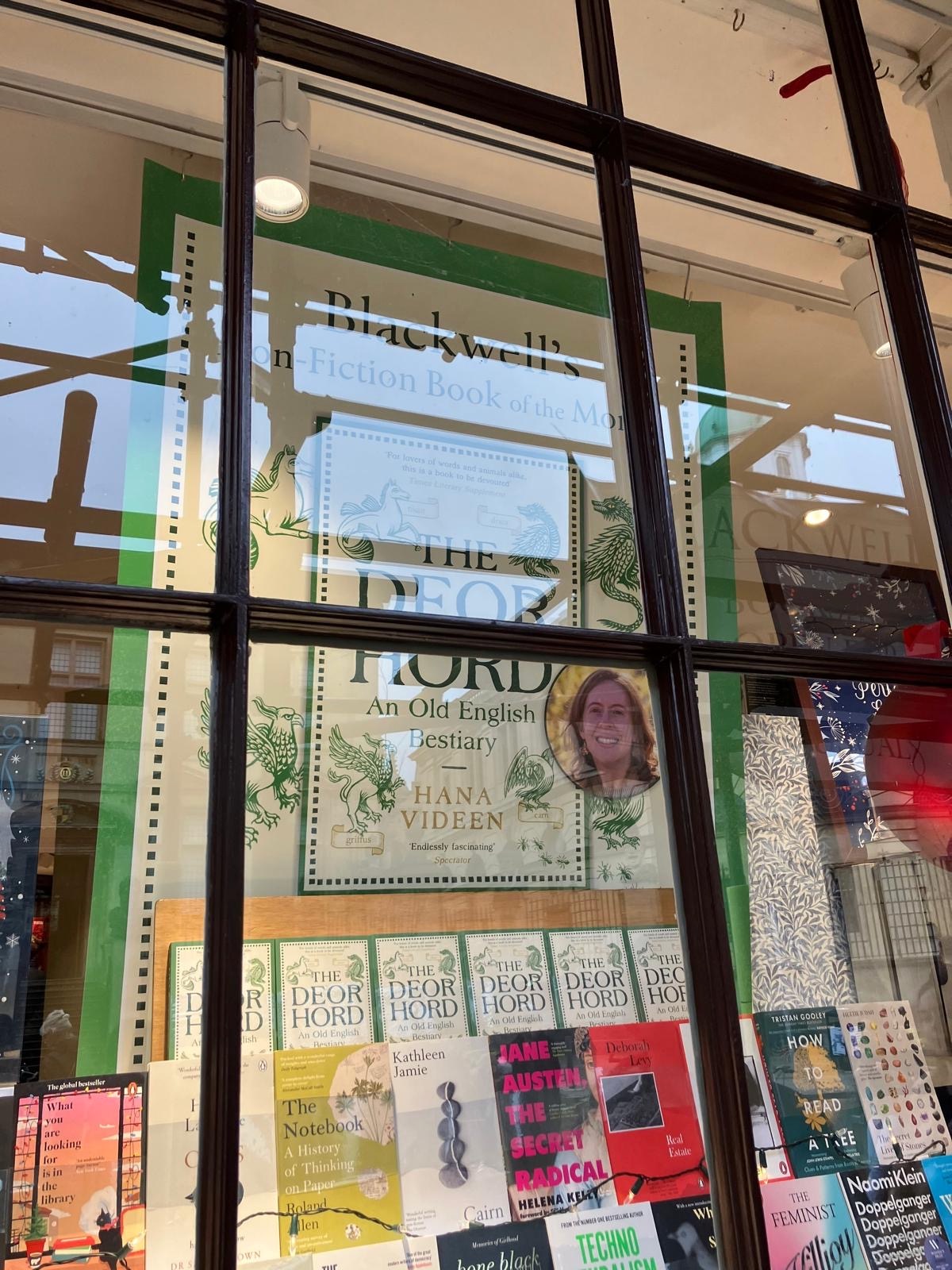
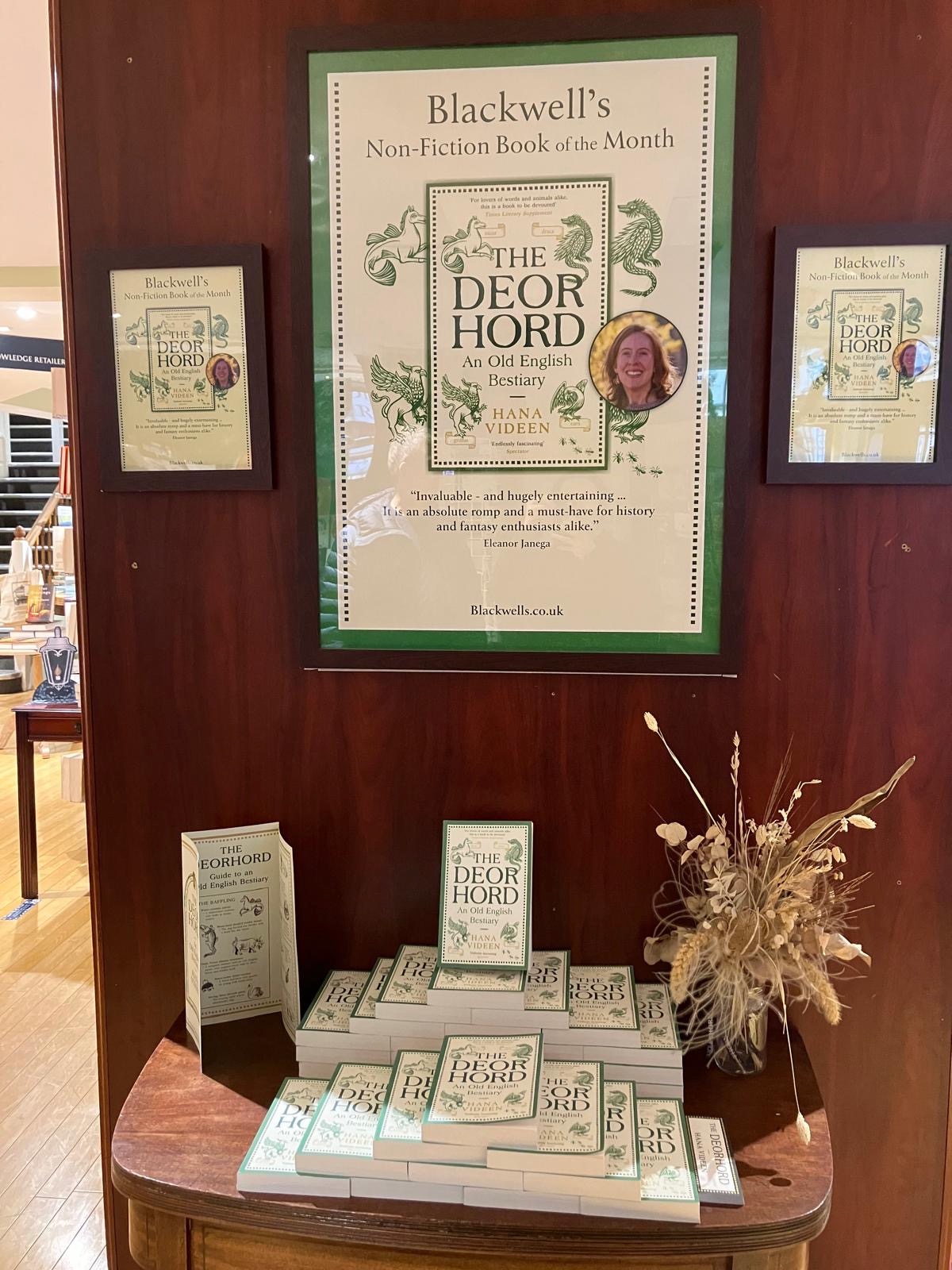
The Deorhord is out now in the UK (Profile Books) and the US/Canada (Princeton University Press)!
Read an excerpt on Literary Hub: Why We Anthropomorphize Animals (and Always Have)
Book + ebook (UK)
- Bookshop.org (UK)
- Waterstones
- Foyles
- Blackwell’s (international delivery included)
- Amazon.co.uk
- Hive
Book + ebook (US/Canada)
Audiobook (UK)
Audiobook (US/Canada)
Praise for The Deorhord
‘A wonderful book in all senses … an essential tool for any student of our past’ – Nicola Griffith, author of Menewood
‘If you love words, the weird and the wild, I guarantee you’ll crouch over The Deorhord like a dragon over gold. A light-footed, big-brained, utterly fascinating read’ – Meg Clothier, author of The Book of Eve
‘This beautiful, fascinating book casts a warm light on the rich and tangled roots of the English language, and the human fascination with animals in the natural world. Hana Videen’s The Deorhord is a treasure trove.’ – Caspar Henderson, author of The Book of Barely Imagined Beings
‘For amateur etymologists, armchair philologists and compulsive readers of histories, The Deorhord will set hearts fizzing with joy.’ – John Wright, author of The Forager’s Calendar and The Naming of the Shrew
‘The Deorhord is a beautifully written reminder of the magical and mystical – a glimpse back in time that uses extraordinary creatures to capture the reader’s imagination.’ – Rebecca Lee, author of How Words Get Good
‘Immensely absorbing … a wonderful window to see our familiar words and ideas in new ways that cover them in curious colours.’ – Victoria Finlay, author of Colour: Travels Through The Paint Box
‘Videen is an excellent guide to lost lore … her endlessly fascinating book is chock-full of archival detective stories’ – Spectator
‘For lovers of words and animals alike, this is a book to be devoured with the voracity of the draca (dragon)’ – Times Literary Supplement
‘A wonderful way into Old English, opening windows on a lost world that shaped ours and still lives within it’ – Ronald Wright, author of A Short History of Progress
‘[A] whimsical book. . . . Come for the fascinating etymologies and stay for the repeated digs at Alexander the Great. The Deorhord has treasures aplenty for animal lovers and curious minds.’ – Foreword Reviews
‘Logophiles of today will find pleasure in this delightful companion.’ – The Lady
‘Absolutely captivating’ – The Well-read Naturalist
‘As fun as it is fascinating and deeply researched … For lovers of language, animals, or history, Videen’s Deorhord contains much that will charm and delight.’ – National Review
‘An etymological treasure trove that the lexicographer Susie Dent might be tempted to plunder’ – Country Life
‘An invaluable – and hugely entertaining – insight into the medieval imagination. The Deorhord illuminates the ways that language influences how animals have been conceptualised and discussed, and introduces a bit of magic to our own world by association. It is an absolute romp and a must-have for history and fantasy enthusiasts alike.’ – Eleanor Janega, author of The Once and Future Sex: Going Medieval on Women’s Roles in Society
‘A very unique and creative book’ – Medievalists.net
‘Some animals were good, some bad and some just spontaneously combusting chickens. … [The Deorhord] entertains as much as it educates and contains much gentle humour. The perfect companion for armchair time travellers. ⭐⭐⭐⭐⭐’ – Fortean Times
‘An authoritative and accessible account of how non-human animal life was understood and represented in early medieval England. Videen manages an effective balance between the medieval, the contemporary, and the personal throughout The Deorhord, sounding a chord between the academic and the conversational that will appeal to a broad range of readerships. . . . Videen’s book is a masterclass in understatement, and the better and more effective for it.’ – Mike Bintley, The Medieval Review
‘Fascinating … delightfully detailed’ – Daily Mail
‘[The Deorhord] helps to open up for a modern audience the intellectual role that animals, whether real or imagined, played in Old English literature. . . . Videen’s lively prose and broad knowledge of early medieval English animals will prove very informative for a general audience, and scholars will find her citations of current research on animal imagery in Old English studies broad and helpful.’ – Brian McFadden, H-Net Reviews


Find out about Hana’s first book, The Wordhord: Daily Life in Old English…
 Old English Wordhord